Report card (year 2)
Rob Tisdall • January 24, 2020
Spoiler alert; I think I got it right …. to this point .... for me.
I no longer celebrate birthdays. If I don’t know when I was born then I don’t have to act my age. I don’t know about age appropriate; I take risks and accept the set backs with the successes. I hang around young people and do what they do - no happy hour dinners and no senior matinees. I’m not worried about my second childhood because I’m ‘way beyond that.
Leisure is a diversion from work: no schedule, no deadlines, no stress. There was no dwindling of my familiar way of life and then a change by default. It was an abrupt, planned change to new challenges - a new profession, new language, different environment. I returned to Bellingham in mid-October with 4 jobs to do. It was raining and cold when I arrived and when I left. I made the various appointments and then waited for the scheduled time. As I worked my way through the job list, I found myself saving a job so I would have something to do the next day. Cutting grass doesn’t take as much time as I seemed to remember from when I had a deadline to get it done on the weekends. Now a small job expanded to fill the day. One of the jobs was raking up the fall leaves. There was a 4 day break in the weather and I tackled the yard like a starving man. Suddenly I found a challenge - how high a pile of leaves could I make? It was self- imposed out of boredom. I couldn’t wait to get back on the plane and return to activities which are rejuvenating and motivating.
Meaningful is difficult to measure, and the end result may not be known for years. How ever there have been a few bright spots. One of the students, who is sincerely motivated to learn English, entered an international contest and part of the testing was conversation. So we spent weekends talking with her and she placed 23rd. Another student had a serious lack of self confidence. I just nudged her along over a 2 year period and she now wishes to be a translator. A third was confused about university courses when she finished the public school here. She didn’t feel she could compete with students from the big city. Several pep talks and she is now in a university engineering degree. Small pleasures but a warm fuzzy feeling.
I never felt my identity was linked to my job so the transition to being an English tutor or glorified teacher’s aide was seamless. I did get a TEFL certificate for appearances, but most of my training was hands-on. Slow my speech, no slang, try to recognize when the students are bored and then change the approach. Students like expected routine so do not go off topic with extra information even though you find it interesting. It’s showtime, so try to remain enthusiastic and don’t sigh. I am becoming an educator.
If anything, my world is getting larger and I have more international interests. There is a stalemate civil war going on 25 miles away, and the Crimea is just a little farther down the road than that. Lots of countries are trying to nibble away Ukraine, both the eastern and western borders, and so there are daily updates. All this is novel to me as I was raised in unappreciated security.
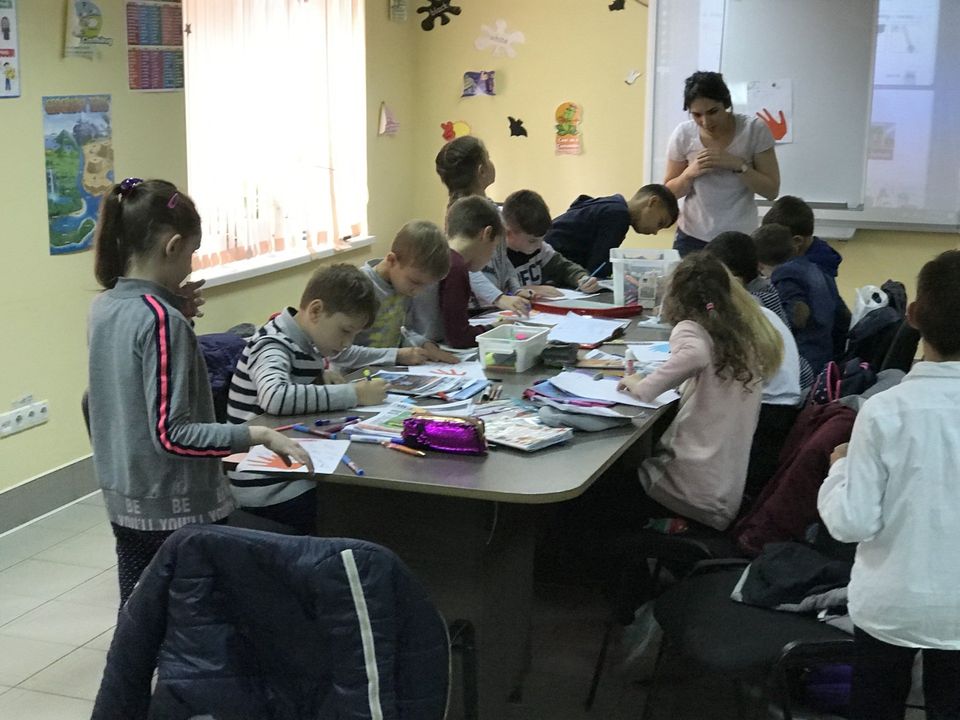
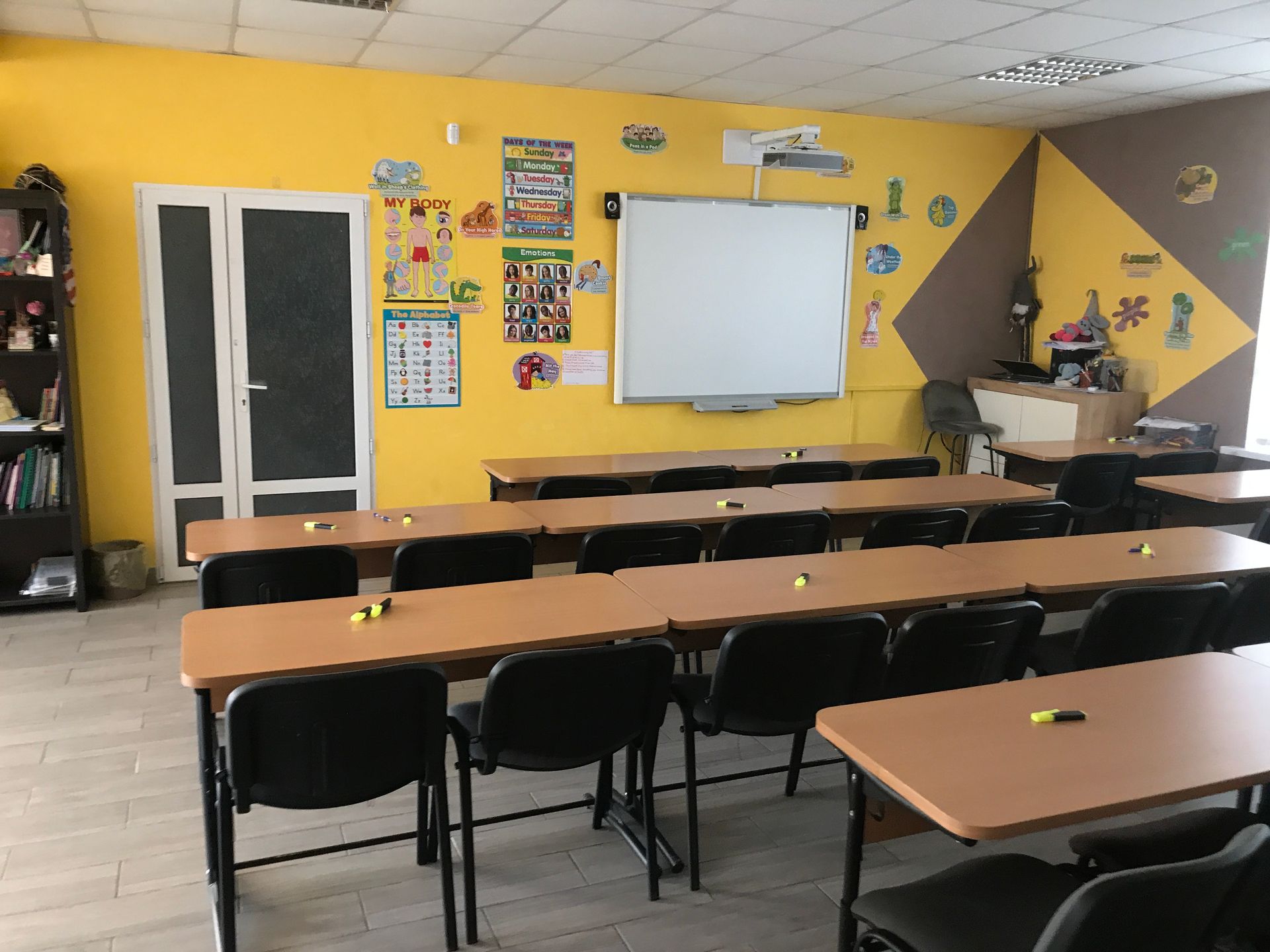
I think I am preparing the basis for a long term legacy. The public educational system here is substandard by any measurement and so I am financing a school building. Up to date audio-visual, a library of English books and hopefully a computer lab in nice surroundings, with Wifi. There is room to expand the number of classrooms as presently there are more students applying than there are available positions. The students will have every preparation, but they will have to supply the grit.
There are downsides.
Realistically, I knew that friends would continue their lives and have little time for me when I reappeared after a long absence. I hadn’t considered the extent of these changes. The retirees who move out of the area to be closer to their families or turn into snow birds and spend their winters in the sunbelt areas. Those who stayed are either attending all their grandchildren’s athletic events or are part-time nannies for the grandchildren and are stuck in this routine without time to play with me. The younger friends are on a circuit of PTA meetings and soccer practices, so dropping in on them is not going to happen either.
I make sure that I have structured time with deadlines. I have discovered that if I do not intentionally make this effort, I can be a world class procrastinator and just idle along. I have not discovered the addiction of video games nor binge watching TV series, but I did watch very video clip on YouTube that involved ice hockey. I have guilted myself into not doing that again by finding on-line Russian language tutorials.
I was warned about being isolated in a ‘foreign country’ by several people and I think they were talking about female companionship. I am not interested in joining the family of a female my age - her kids, her grandchildren and their activities, her hobbies. The younger women are still getting their kids launched and again I am not interested in reliving teenaged angst. But I am not alone and do have a family - Svetlana, Vladimir and 300 or so kids of various ages. I find myself getting into their lives. There is a memorable line in the movie “Good-bye, Mr. Chips” (1939). It is the story of a life-long teacher in a boys school. When Mr. Chips was on his death bed, someone stated it was a “pity that he had no children”. He replied “But I have had thousands of them”.
ReCent Posts
I have been sponsoring a university student from Moldova; 20 years old and had never discussed finances at home. Every Moldovan understands budgets due to low incomes, but financial literacy ends there. About 2/3 of American 20 year olds are financial illiterates but listening to this Moldovan’s expectations is cringe worthy - get any university degree which leads to a large salary then a ‘forever’ home on a lake with parking for a Lambourghini, and you are not even 30 years old. When he arrived, his first priority was obtaining a credit card and was annoyed by the different interest rates of different cards. Then he spent time focussing on his credit score. He got a part-time job tutoring math students at the college, making 75% of his mother’s income and then was outraged that he had to pay taxes. He is slowly becoming aware that those with a very large incomes work long hours with a skill that is in demand and the pressure doesn’t end during your working life. So there is little time to enjoy what wealth buys. In Moldova, the average income is $670 USD per month; the average apartment rents for $200 to $310 and food another $500 per month. Cars and computers cost the same as they do in the US. Now try to save 20% after needs and wants to put into savings for future catastrophes. We discuss American financial “Rules of Thumb” but they simply do not work in Moldova. Moldovans live in a different situation. In 2022, the average annual American salary after taxes was $58,389. Depending on all the variables it costs a total of $30,000 to $42,000 for housing, food, transportation, medical, and the rest of the taxes. There has been 13% inflation since then, but one could still put aside 20% into savings and still have something left over for indulgences. The rich spend more money in absolute terms but they have choices. They can spend a great deal of money for an extravagant lifestyle, or spend less and blend in with the middle class as “the millionaire next door”. But the mandatory spending for needs is a smaller percentage of their total income. I tried to continue the conversation with Moldovan reality but there was not sufficient information. So what about the 10% of the American population that is considered ‘poor’. Accommodation is a killer for the poor. Using Seattle as a 10 year example, the rich person bought 2 houses side-by side and rented them out. The renter initially paid $1600 monthly and this increased to about $2200 in 10 years, for a total of $220,000. The renter was evicted at that time 10 years older but with a good renter reference. The rich guy was net $660,000 richer. It is hard to assign fault for the food deserts in impoverished neighborhoods. The net effect is that you pay higher prices at the corner store or you travel a much farther distance to a large food store for cheaper prices. Small corner stores generally do not sell in bulk, but the poor cannot afford the initial outlay costs of a trip to Costco where the food would be half the price of the corner store. Even the homeless living in tents have additional expenses for ice for their ice chest to keep food cool, propane for their stoves for cooking, water for drinking. The social security data show that the richest 1% males live almost 15 years longer and the women 10 years longer than the poorest 1%. Can we blame good, but expensive health insurance for the difference? Transportation is expensive as it takes more maintenance costs to keep an older car running but how do you put a cost for the hours of waiting for slow public transportation even if it is reasonably available? What is your time worth while waiting for a bus? Is it better to buy low quality clothing every year or good quality clothing every 5 or 10 years for a purchase price of about double. Can they even afford to maintain their clothing if seams start to separate? The poor often only have the option of 2 bad choices and so have to sacrifice their long term future just to get through the short term day. These choices compound over time and become very expensive. Payday loans, low credit scores, banker’s charges for overdrawn accounts all add up. They have a multitude of small expenses that nickel and dime one continuously. So how is the Moldovan prodigy reacting? He is realizing that adulting may not be as easy as he thought. He is thinking about this subject in his spare time. For instance, he asked me one day if divorce was the only instance where someone gets rewarded (with division of assets) for breaking a contract. The message I keep repeating is that wealth isn’t about what you can spend but rather being in control of your life and having choices. In order to accumulate this wealth he will be working long hours and continuously improving his skills base. He may be able to afford the perks of wealth but he won’t have the free time to enjoy them; however, his kids most certainly will.

The ‘wisdom’ tells us there are 3 stages of retirement: go-go, slow-go and no-go. I hadn’t given much thought to transiting to the second stage as I was too busy in the go-go stage. Besides, other than a brief episode of atrial fibrillation, I was physically unrestricted. I wasn’t happy about weighing 20 pounds more than when I retired but was working at it and I hadn’t been sick and kept up the recommended booster shots against ‘flu and Covid. Nothing had changed and aging was just a number. I vaguely thought that I would ease into the next stage sometime in the future, like a controlled motion down a gently inclined ramp until you reach the point where an activity seems too much effort. You are now a go-slow. I have since learned that the gentle ramp is more like a set of stairs and some of the steps have deep drops. It began as a free-fall, suddenly, with a viral bronchitis which made breathing difficult unless I continually coughed. In 6 weeks it had progressed to edema of my legs secondary to congestive heart failure and oral diuretics were not much use in controlling the edema. This caused profound shortness of breath with any muscular movement. Additionally, the edema was such a degree that any movement such as getting into a car was a struggle because my knees were so tight with edema they wouldn’t bend enough to get in a car. Extensive work up showed all the usual suspects were working well: heart, kidneys and liver. However, your heart is surrounded by the pericardial sac; this holds the heart and attaches the heart to the upper rib cage. Ultrasound showed that here was fluid inside the sac that compressed my heart to a degree that the heart could no longer fill with enough blood for my needs. My heart was getting shrink wrapped. This resulted in a procedure using a hook to tear a hole in the sac to let the fluid out, but it was minimal help. It had now been present for 4 months and as the edema progressed the shortness of breath got worse. Hospital admission for maximal treatment of my edema was successful enough that they decided that they would open my chest and cut a window from the pericardium. The relief of my shortness of breath was notable from the first post op day. I lost the 40 pounds of edema, but all the lying around in bed had resulted in loss of muscle mass and my weight now is the same as in high school. So far it has been 9 months of improvement in strength and endurance. Mentally, I was fine and scoured the internet for various subjects like AI and the projected/unexpected consequences, thoughts on rebuilding the destruction of Palestinian Gaza, and annoying the Moldovan university student I am sponsoring with financial realities. I am also minimalizing my life by purging things I haven’t used or thought of for 10 years. I have since learned this is called ‘Swedish death cleaning’. What have I learned as I enter what I hope will be a long go-slow period? The go-go years can end abruptly so do not postpone any physical interests because you have “plenty of time”. Remain curious and act on those interests: take up mountain climbing, martial arts or whatever.

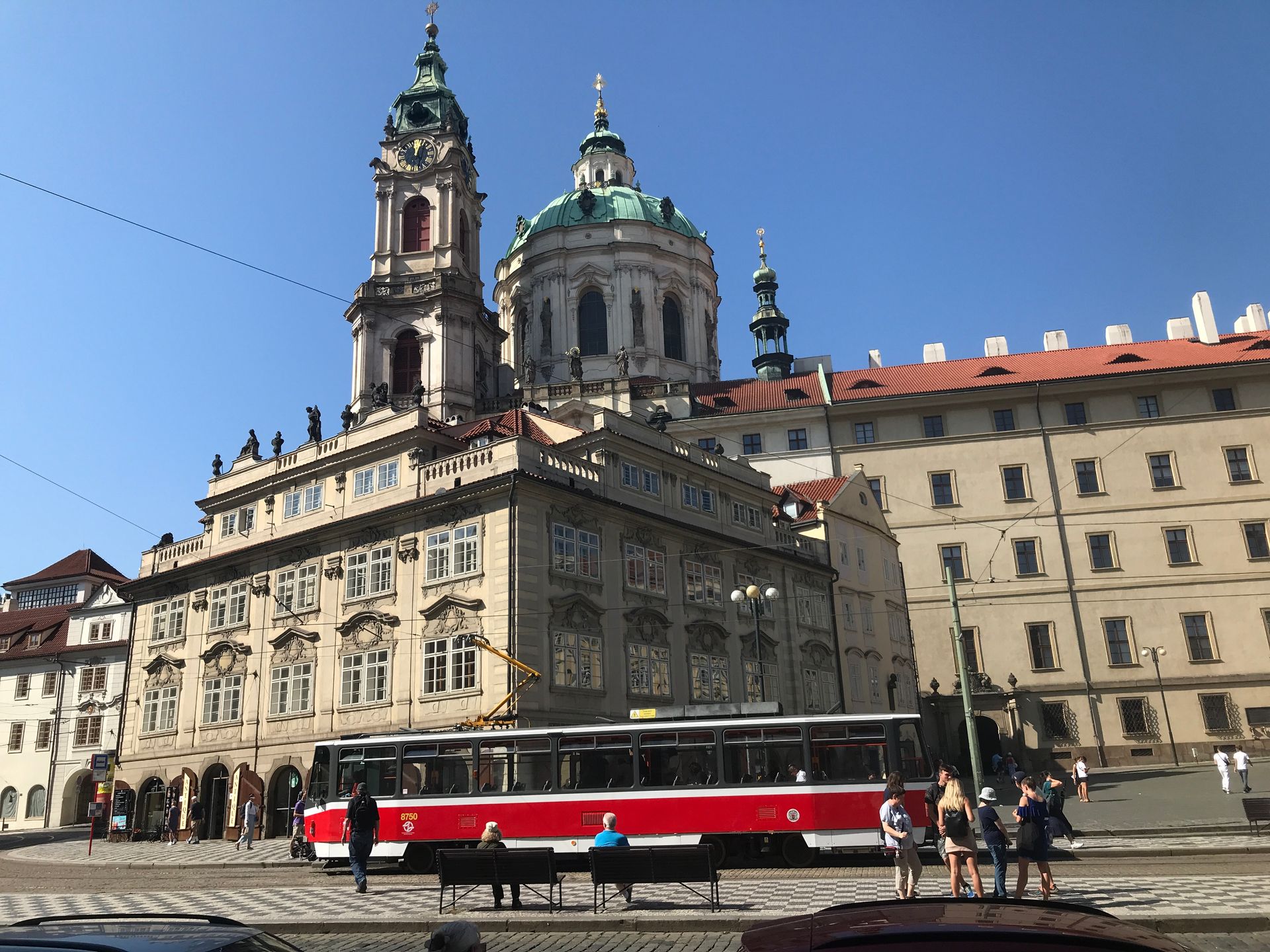
Cyclists in Prague appeared slightly different but I couldn’t figure out why. When the same feeling occurred in Budapest it suddenly struck me … no bicycle helmets! They just hop on their bikes without the preparation we have come to expect in Bellingham. Flashback to when I was a kid and packs of us rode all over, including downtown in a major city, generally obeying the rules, because we understood the pain of getting hit by a car. So we paid attention. A herd of kids on bikes would chase the mosquito spray truck down the street and suck up the mist. We all survived that. A friend was over and we were cooking dinner (actually she cooked and I refilled her wine glass). She asked for a wooden spoon and then commented that it had never been used. I replied that it always made me vaguely uncomfortable. After some penetrating questions, she decided that it was the enforcer of choice if I annoyed by Mother or Grandmother enough. My pure Pavlov response. Teachers threw objects at misbehaving students and if you were in real trouble, there was a public strapping, five on the right hand and 5 on the left. Then there was Mrs. Neubauer who liberally applied her yard stick - anywhere she could reach. I believe the PC term today is somatic punishment and is against the law in 51 countries and the majority of American states. But it sure taught us compassion and respect. And we all survived. We travelled around in cars without seat belts and I never saw an infant car seat until I was 25 yo. When I was a teen, we all drove in the bed of open pickup trucks. I hitch hiked to school in the morning and eventually all over the country. And we generally survived. We had candy cigarettes, made clay ashtrays as school crafts, played cops and robbers with BB guns, practiced blowing up things with fireworks and drank out of the garden hose. We watched movies where people were shot with guns or hacked up with swords. Our parents kicked us out of the house at 9 AM to “Go play in the street” and told us not to return until dinner. We never used sunscreen because a good tan was considered healthy. The playground equipment was embedded in concrete reinforced with asbestos. We had unsupervised play with water pressure rockets, target-tipped bows and arrows and lawn darts. We were free range kids. My internet was the library and I spent hours scrolling through it. We learned a lot of lessons and we survived. A slice of bread (reinforced with iodine and preservatives) was a sandwich, hot dog bun, hamburger bun and garlic bread - all-in-one. Food allergies were unknown. We ate sugars and fats and there were very few chubby kids because we were so physically active. Organic was what your grandmother grew, after she added chemical fertilizers and had sprayed for insects. We survived. Now that we are living in an enlightened age, and have cancelled all the above, has the product improved? It seems 44% of university students are depressed, 37% are anxious and the list continues with ADHD, disruptive behavior disorders and the rest. Will they survive?
I must walk around with a scowl on my face because I am frequently asked if I am “Happy”. My understanding of happy is there is a lifetime happiness curve, U shaped, with the bottom at 50 yo and peaks at 23 and 69. But after 69 it doesn’t point straight down as there is an almost horizontal line on the right. Also, there is a genetic predisposition to happiness with 30 - 40% of a population finding it is easier to be happy. The rest is environmental influences such as traffic delays, winning the lottery and such. So happiness comes and goes daily but contentment levels out the highs of a birthday cake and the lows of a traffic ticket. So I gave some thought to a Contentment Index. I think this needs to be weighted because some points influence the others. 1. Financial. (50%) This is the big one; the foundation of successful retirement and all the points that follow. This subject is so important that most of the megabytes of retirement advice are about finances. Financial independence allows the individual the freedom to be in total control of what you want to do each day. Keep monitoring your finances and live within your means. 2. Health. (25%) A retiree should shift their focus from wealth to health; take up nutrition courses, cooking classes and such. Keep a regular schedule of physical activity and keep your annual physical appointments. 3. Social connections and new relationships (10%) The office camaraderie is gone and there will be a need to find others with similar interests. Accept that the social group will change every 5 years as people move on. 4. Where you live (5%) Will moving change your support system of friends and relatives? Is scaling back going to effect large family gatherings? 5. Brain stimulation. (5%) “Curiosity may have killed the cat, but a lack of curiosity kills the happy retiree”. 6. Adaptability. (5%) There are 3 stages in retirement: go-go , slow-go, and no-go. So …. how am I doing? 1. Financially I am doing well and only spend money on things with the potential of improving friendships. Floating in a large boat by yourself is not fun. 2. My health remains good but I still eat preserved foods, drink wine and participate in other assorted sins. I go to the gym at least every second day. 3. Socially, I am gravitating to younger, upbeat, and mentally stable friends. I am avoiding the grumbling, the narcissistic, and the irresponsible. I am saving myself time, because one strike and you’re ignored. There is someone who calls every week to make sure I am not dead and composting somewhere. This person is also a sounding board who makes sure that I stay fairly main stream in my thinking, as long as we avoid certain subjects. 4. Location. In my travels, have not found anywhere better … yet. 5. Stimulation: I am slowly progressing in learning the Russian language and find the treadmill an excellent place to do my homework; in spite of others in the gym wondering about this strange old guy talking to himself. I also have the wherewithal to try new experiences out of my comfort zone. 5. Adaptability. I am in the first stage. I do have plans but they are not rigid as I am working through the alternatives for the next 2 stages. So, how am I doing? I’m deliriously content.
My retirement date is now in the distant past and I have dealt with my post-party letdown. I now have new routines and a new identity and this works for me at present. I feel productive but am having a slight problem with procrastination because when you have all day to do it ….. I do get some degree of pleasure finishing the laundry - wash 22 minutes, dry 36 minutes, folding and putting away 10 business days - or raking the leaves - which way is the wind blowing today?. I now have enough free time to observe the subtle signs I am aging. Aging is not retirement. One is going to age either in an office or having fun; it will happen. 1. Nobody calls me Bro, Guy or any other term of familiarity. I am addressed as “Sir”. It is not a lack of respect but more that I am no longer a contender. At least I am not invisible. I was on a crowded airport bus and a 50 year old man signaled that I could have his seat. I just pointed to my hair color and then his and laughed. However, the first kid who offers to help me cross a street ….. 2. Several months ago I had a momentary flash of pleasure when I was asked for photo ID when buying wine. He just scanned my driver’s license and told me it was company policy that every alcohol sale has the customer’s ID scanned. Now I am noting if I get more than a brief glance after asking for my ID. 3. My friend group has really changed in the past 5 years as they moved to warmer climates or are spending most of their time monitoring grandchildren. Conversation has changed from party nights and big cars to social security changes, pensions and lots of medical talk. There is a reason for senior hour in the restaurants because we will have time to see all the grandchild pictures and we all have to be in bed by 9:30. Does this mean a totally new group with new grandchild stories every 5 years? 4. When I was about 60, I learned not to grunt when I got out of a chair but now I am getting all kinds of strange pains. I have learned that continual attention to changing posture and daily gym trips keeps them minimal. My hair is thinning in tandem with my skin and subcutaneous fat. Healing is taking longer, so I have accumulated enough scratches and bruises to look like I am being beaten and the family doctor always asks if I feel safe! I am ignoring the age spots and keratoses from a lifetime in the sun. 5. I used to be spontaneous but now activities require meticulous planning. Decades ago I spontaneously jumped on an airplane for a weekend special in London, but now I’m concerned about “how do you get from the airport in Prague to the hotel, how much should it cost and where do you find the ride”? 6. I am noting a vague sense of “survivor’s guilt”. I have arrived at this point in my timeline without too much mental or physical trauma and have complete emotional and financial security. I am noting the large numbers of those who are just as deserving but are not in a similar state. I am wondering about the how and why. 7. Now the good news. My medical numbers have always been in the good range, and I am developing nostalgia for french fries coated in greasy brown gravy or for a binge of eating sticky buns. The actuarial tables say I will not succumb to anything food related because there is not enough time for chronic changes to develop. There are also some cancer screenings that are no longer necessary for the same reason. A peculiar situation. I have no doubt there will be more foreboding perceptions to follow. …. drip by drip, but I am not going to age gracefully. It will be more like fearlessly.
I paid my own way through university and the main reason I have no fond “alumnus” feelings for the experience was the genteel poverty. Not having enough money to experience the concerts, beer bashes and visiting the student union buildings that seem to give graduates the warm fuzzies. One of the English students in Moldova was having a major problem with confidence and didn’t think she could compete with the “big city” kids at university, especially in an IT program. So I suggested and pushed and cajoled, and then overpaid her for doing some translations for me. She’s got the fire in her belly and she graduated last month with great grades. I am now looking for a similar student to monetarily sponsor, but how do I determine if they have Fire in their Belly? This refers to someone’s drive or motivation to achieve success. It is not a passion, as this comes and goes. Fire in Your Belly doesn’t ebb or flow, it is a continuous striving. I decided on several screenings to find the proper candidate. 1. They have a history of drive from a very young age. It seems to be in the DNA part of their personality. I am going to ask about the first job they took for whatever the pay was as a child: cutting grass, shoveling snow, baby sitting. A reliable worker who did a good job. 2. They have something to prove to the world or want to show someone is wrong. They have been influenced by role models or groups important to them and they have a goal as an endpoint. I am going to ask who these influencers were and why they were important. 3. They have overcome real obstacles - life changing events such as loss of parents or major injuries. I am going to find out the details of how they adapted to these setbacks. Additionally: 1. They have a curiosity and really listen to different ideas, read voraciously and test their knowledge or beliefs. 2. They are creative and willing to try something different. They then accept the hard truth, face the reality of failure, and adapt. This is courage. 3. They have character and know the difference between right and wrong, even if nobody is watching. 4. They need to be competent with a large amount of common sense. They are not afraid to surround themselves with people who are smarter than they are and then listen to them and adapt. What about the late bloomers - those in their 30s who finally see the light of motivation? I don’t know as I am interested in the teenagers. Maybe I need a second fund?

They are now measuring age by the number of years left to live. This makes sense because the life expectancy in this country has increased from 47 in the early 1900s to about 80 at present. In 1935, the minimum age for receiving full retirement benefits was 65 and yet the average life expectancy was 60. Now there is 1/4 of your adult life left once you retire. As recently as the 1960s, it was expected that retirees’ health would decline in a straight line until all systems crashed. Today, medicine has granted the retirees a long period of good health with no limiting events thanks to pacemakers, joint replacements and such. The health line is now horizontal and straight with an abrupt, short term, fall at the end. Around five years after retirement, the average American has a 6 to 9% decline in mental health, a 5 to 6% increase in medical conditions, and a 5 to 16% increase in difficulties with daily activities from a combination of the above. This all seems to be from drastic lifestyle changes, not the retirement itself. The curse is the result of the transition from work to retirement, not the advancing years. The key to avoiding the above seems to be to ease into retirement to something and not retirement from something. So, how to do this properly? Slowly change the established routines to new routines or new habits. Phase back the work load and fill the time with other meaningful activities that you find productive and create a new sense of self-identity. Procrastination is not a routine. Replace the social contacts at the office with people from a different environment. An 85 year Harvard study found that the hours of working on all the problems of your job are better spent on keeping up social contacts - virtual or other social connections . Or you could get a pet that would depend on you . Use the new routine to maintain physical activity. Shift your focus from wealth to health. Go to the gym for the physical benefits as well as the social contacts. Continue the routine of regular meals on a regular schedule and don’t have breakfast at noon. If you have a relationship, involve them in the transition. There will be a new equilibrium in relationships; move-not move, travel-not travel, etc. The statistically highest divorce rate is between 50 and 64 years old and one third of these have been married more than 30 years. Use your skills, make your own hours, work part-time or volunteer but find a meaningful purpose. You are not retired; you are a consultant. Having a purpose is more important than all of the above bullet points. Regain your respect. One is not retired, but a consultant. Of course, you could always put the curse on hold and unretire.
The body content of your post goes here. To edit this text, click on it and delete this default text and start typing your own or paste your own from a different source.

Regardless of its origins in the mid-1900s, woke has now mutated into a plethora of positive or negative connotations, depending on the agenda. However, it is basically a way to divide people into groups with expectations of a certain behavior. I have been grouped as ‘retired’, a mildly stinging but benign label. But now I am also an ‘elder orphan’! A “vulnerable” group of older people who do not have a spouse or children to depend upon. Somehow this differs from a ‘solo ager’ who has never had children. Why? To what purpose? Supposedly, we are 22% of those over 55 years old and we come with a whole list of concerns for the social workers - 23% worry about not having enough money, 25% fear losing their housing, 40% are depressed, with 37% being anxious and 52% feeling loneliness. This is the subject of conversations I have with most of the retirees that I know who do have spouses and kids. So, before we allow the policy makers to look into the problems and solutions, let’s dissect this grouping. You are going to be solo at some time in your life. Anyone can see this coming if you consider that half the population will be a widow or widower at some point. Life is dangerous and none of us are getting out of this alive. You can mitigate this assumption by surrounding yourself with an expanding group of friends and acquaintances; hopefully younger and interesting. You could continue working at any job, volunteer, take courses at a school, whatever, but keep pushing forward. With minimal thought, the fear of losing your housing or not meeting your basic needs ought to make you consider that one should do some financial planning before arriving at this point. It might not be as daring, but job hopping before a pension becomes vested or quiet-quitting or living paycheck to paycheck should require more caution. Fair enough, there is a work - play balance, and there is merit in quitting one job for better opportunities in another, but there are also some long term consequences that need consideration. Ponder this. About 30% of millionaires in this country averaged an income of $100,000 a year and one third of these never made 6 figures in any single year. Sounds to me like this fear is a consumption problem. Depression among the elderly is a consequence of social isolation objectively and a feeling of loneliness subjectively, but is not due to the aging process itself. The group with the highest rate of depression in our culture are those between 12 to 25 years old; well out of ' retired' demographic. Social isolation is a result loss of family and friends, living alone, chronic illness or even hearing loss. Begin with your family doctor to see if there is a need for a possible physical tune up and then get active. Stressful life events cause anxiety but it does keep you engaged. I am not happy that my body shows the loss of elasticity and the triumph of gravity. But face it, my body is becoming antique and I can’t do the physical things I have been used to. So it takes me longer. But with retirement, I have a lot more time to complete the task. I have no fear of losing my independence because that is why they have French maids. And for any other cause of anxiety, there is always the 4 o’clock martini.

It’s raining again, and I need another activity. So I did an inventory and considered all the boxes I tick already: gray haired, gruff, cranky, haven’t handed out candy at Halloween for years, find Christmas carolers annoying, will never be woke, have stubborn resistance to those who think they can change the psychology of people, and have never been a model citizen. I think I’ll work at being a curmudgeon. One of the nice things about the word curmudgeon is nobody can adequately define it. There are lots of antonyms: affable, companionable, cordial and extroverted. But look at the illustrious alumni: Winston Churchill, Oscar Wilde, Groucho Marx. Not exactly antonyms but are still considered curmudgeons. I would include Dorothy Parker and Fran Lebowitz, but the bonus point is that it is a boys only club. A female curmudgeon is called a termagant. In order to stand out from the crowd, I’ll need to specialize . Say, catalog the inconsistencies around me. The United States was founded on no taxation without representation. So why is the kid working at McDonald’s paying income tax when they can’t vote? Don’t work so hard; stop and smell the roses. Well if you don’t work long hours then you won’t have the money to afford the roses. Don’t make a large salary and not get enough sleep. But the Covid mess showed us that you can both make less money and get no sleep. He is homeless because he lives in a tent. Well, hold on, when I was much younger we called that a vacation and I have very fond memories of it. Study harder; you are the future of your country. But as I have said somewhere, the kids in Moldova are studying English harder so they can get a job in another country. The Democrats have funded their social programs resulting in inflation and are desperate for more money. I propose a Happiness Tax on single males because they aren’t sharing in the domestic misery. Call it a “No wife, No strife Tax” I now have the time to consider more inconsistencies.